Soft Dom vs
Hard Dom
Two distinct styles of dominance, each with its own unique expression and impact.
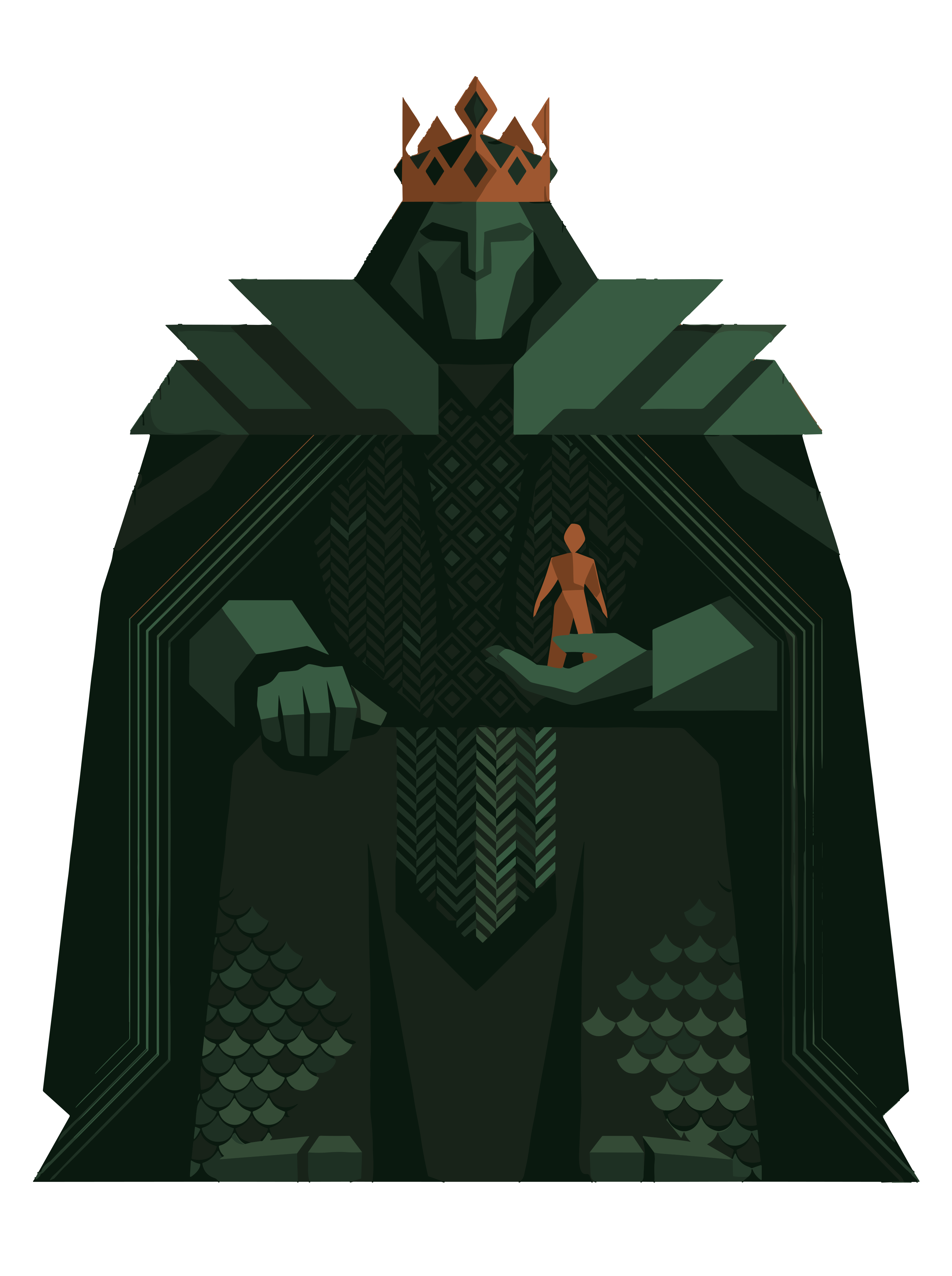
“Authority expressed through nuance, suggestion, and deep emotional attunement.”
A Soft Dom typically exercises dominance through subtle cues, emotional influence, and guiding rather than direct command. Their power often lies in their ability to read and shape the dynamic with a gentle yet firm hand, prioritizing connection and consent through less overt means.
- Subtle control
- Emotional depth
- Guiding presence
- Focus on connection
- Responsive to nuance
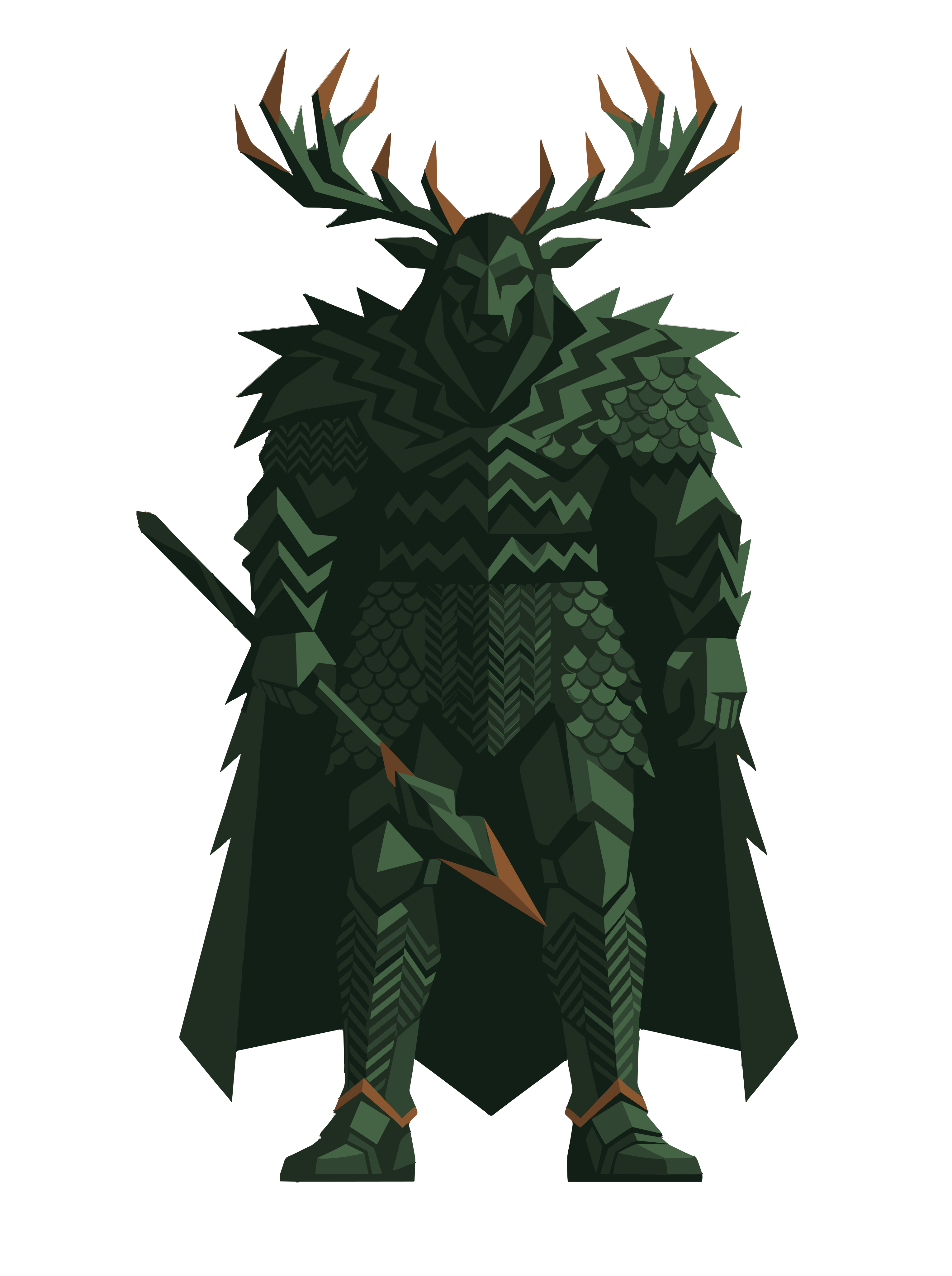
“Authority expressed through clear commands, firm boundaries, and decisive action.”
A Hard Dom typically asserts dominance through explicit commands, strict rules, and a more overt display of control. Their power is often direct and unambiguous, providing a clear structure and leaving little room for negotiation within established boundaries, emphasizing discipline and obedience.
- Explicit commands
- Firm boundaries
- Decisive action
- Emphasis on discipline
- Clear structure
“Authority expressed through nuance, suggestion, and deep emotional attunement.”
A Soft Dom typically exercises dominance through subtle cues, emotional influence, and guiding rather than direct command. Their power often lies in their ability to read and shape the dynamic with a gentle yet firm hand, prioritizing connection and consent through less overt means.
- Subtle control
- Emotional depth
- Guiding presence
- Focus on connection
- Responsive to nuance
“Authority expressed through clear commands, firm boundaries, and decisive action.”
A Hard Dom typically asserts dominance through explicit commands, strict rules, and a more overt display of control. Their power is often direct and unambiguous, providing a clear structure and leaving little room for negotiation within established boundaries, emphasizing discipline and obedience.
- Explicit commands
- Firm boundaries
- Decisive action
- Emphasis on discipline
- Clear structure
Six dimensions, side by side.
Two voices, same song.
Despite their distinct approaches, Soft Doms and Hard Doms share fundamental commonalities that underscore the essence of healthy BDSM. At their core, both styles are built upon the bedrock of consent, trust, and negotiation. Regardless of how authority is expressed, the submissive’s willing participation and the dominant’s responsibility for their partner’s well-being remain paramount.
Both Soft and Hard Doms are deeply committed to the dynamic they create. They invest energy in understanding their submissive, establishing boundaries, and ensuring a safe and fulfilling experience. The difference lies not in the depth of their commitment, but in its outward manifestation.
If you're not sure, that's a useful answer.
- 01Do you prefer to lead through subtle influence and emotional connection, or through direct commands and clear rules?
- 02Does the idea of psychological play and gentle guidance excite you more, or the implementation of strict discipline and overt control?
- 03Are you more drawn to fostering a deep, emotionally resonant dynamic, or to establishing a structured, command-based relationship?
If you're not sure, that's a useful answer.
Consider the kind of energy you wish to bring to a dynamic. Your authentic expression of dominance will be the most fulfilling for both you and your partner.
- 01Do you prefer to lead through subtle influence and emotional connection, or through direct commands and clear rules?
- 02Does the idea of psychological play and gentle guidance excite you more, or the implementation of strict discipline and overt control?
- 03Are you more drawn to fostering a deep, emotionally resonant dynamic, or to establishing a structured, command-based relationship?
Same terrain, our language.
Our quiz maps you to one of ten archetypes. Here's where these roles sit in that system.

Not sure which one fits? The quiz takes seven minutes and tells you.
Discover your archetype →Other pairings.
A reading will tell you.
Twenty-four scenarios, seven minutes, one long letter to yourself. Anonymous. Free.
Begin the reading →A reading will tell you.
Twenty-four scenarios, seven minutes, one long letter to yourself. Anonymous. Free.