Sub vs
Slave
Two paths of submission, distinct in their depth and scope.
“The one who willingly yields control within a defined dynamic.”
A Sub typically refers to an individual who embraces a submissive role, often within a negotiated framework. This role is characterized by a consensual surrender of control, focusing on trust, pleasure, and the exploration of power dynamics within agreed-upon boundaries.
- Consensual surrender of control
- Negotiated boundaries
- Focus on trust and pleasure
- Often scene-bound or time-limited
“The one whose service and autonomy are deeply committed to another.”
A Slave usually denotes a more profound and enduring commitment to service, ownership, and the relinquishment of personal autonomy within a dynamic. This role often involves ritual, formal protocols, and a stronger sense of ongoing dedication that extends beyond isolated scenes.
- Deep, enduring commitment
- Relinquishment of autonomy
- Often ritualistic and formal
- Life-encompassing or long-term
“The one who willingly yields control within a defined dynamic.”
A Sub typically refers to an individual who embraces a submissive role, often within a negotiated framework. This role is characterized by a consensual surrender of control, focusing on trust, pleasure, and the exploration of power dynamics within agreed-upon boundaries.
- Consensual surrender of control
- Negotiated boundaries
- Focus on trust and pleasure
- Often scene-bound or time-limited
“The one whose service and autonomy are deeply committed to another.”
A Slave usually denotes a more profound and enduring commitment to service, ownership, and the relinquishment of personal autonomy within a dynamic. This role often involves ritual, formal protocols, and a stronger sense of ongoing dedication that extends beyond isolated scenes.
- Deep, enduring commitment
- Relinquishment of autonomy
- Often ritualistic and formal
- Life-encompassing or long-term
Six dimensions, side by side.
Same roots, different depths.
Despite their distinctions, both the Sub and the Slave roles are built upon the foundational pillars of BDSM: explicit consent, profound trust, open communication, and mutual care. A fulfilling submissive experience, regardless of its label, is always rooted in these principles.
It is crucial to recognize that one role is not a "stepping stone" to the other, nor is one inherently "more" submissive. A Sub is not a Slave-in-training, and a Slave is not simply a Sub with more rules. They represent different, yet equally valid, pathways within the vast spectrum of BDSM.
If you're not sure, that's a useful answer.
- 01Do you seek submission primarily within defined moments or as an overarching aspect of your life?
- 02Are you drawn to the freedom of negotiated boundaries, or to the profound commitment of relinquishing extensive autonomy?
- 03Do rituals and formal structures enhance your experience, or do you prefer a more fluid and adaptable approach to submission?
If you're not sure, that's a useful answer.
If you find yourself contemplating these roles, it’s helpful to reflect on the kind of submission that truly resonates with your inner landscape — and the level of commitment and relinquishment you are prepared to embrace.
- 01Do you seek submission primarily within defined moments or as an overarching aspect of your life?
- 02Are you drawn to the freedom of negotiated boundaries, or to the profound commitment of relinquishing extensive autonomy?
- 03Do rituals and formal structures enhance your experience, or do you prefer a more fluid and adaptable approach to submission?
Same terrain, our language.
Our quiz maps you to one of ten archetypes. Here's where these roles sit in that system.
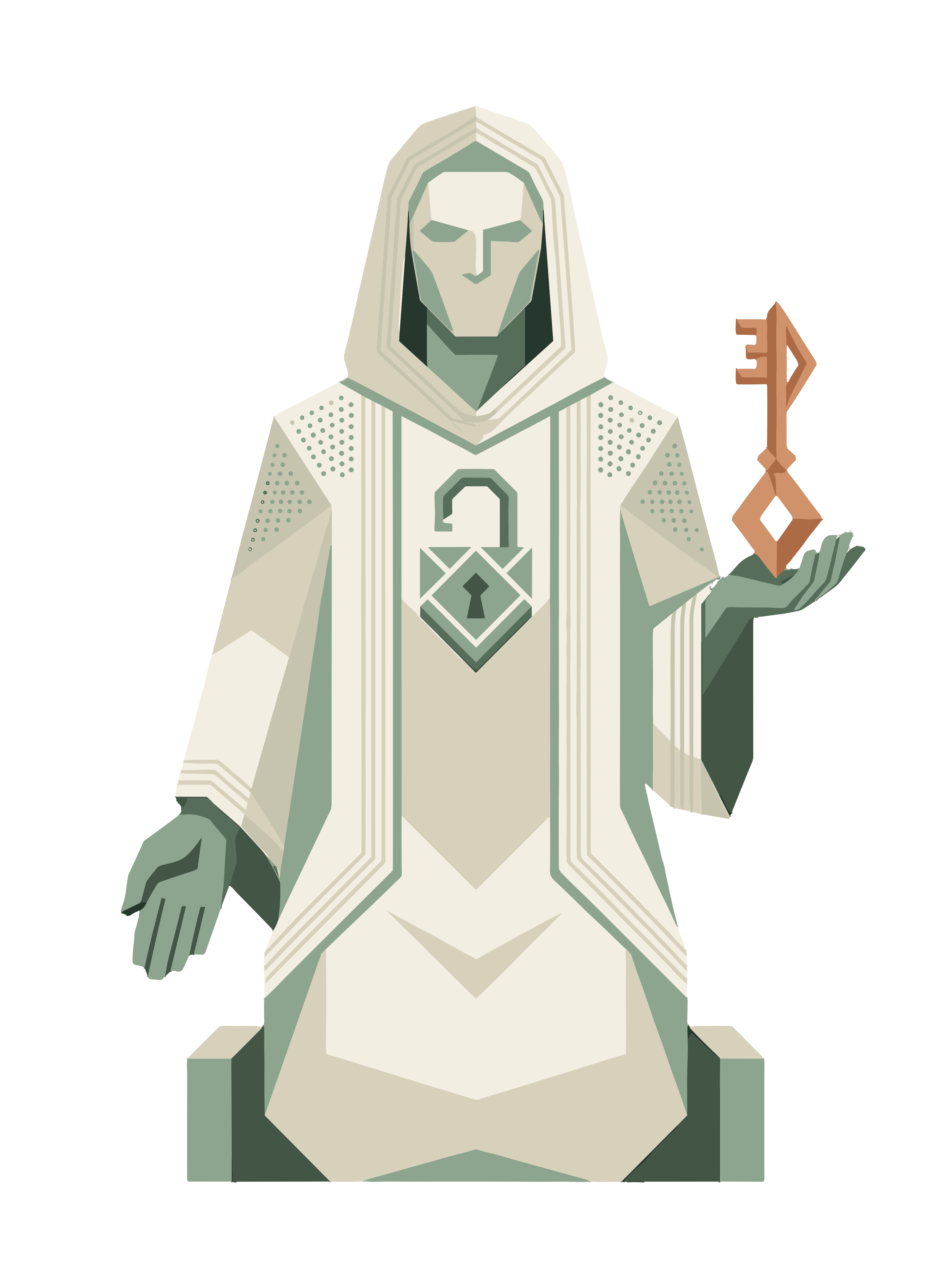
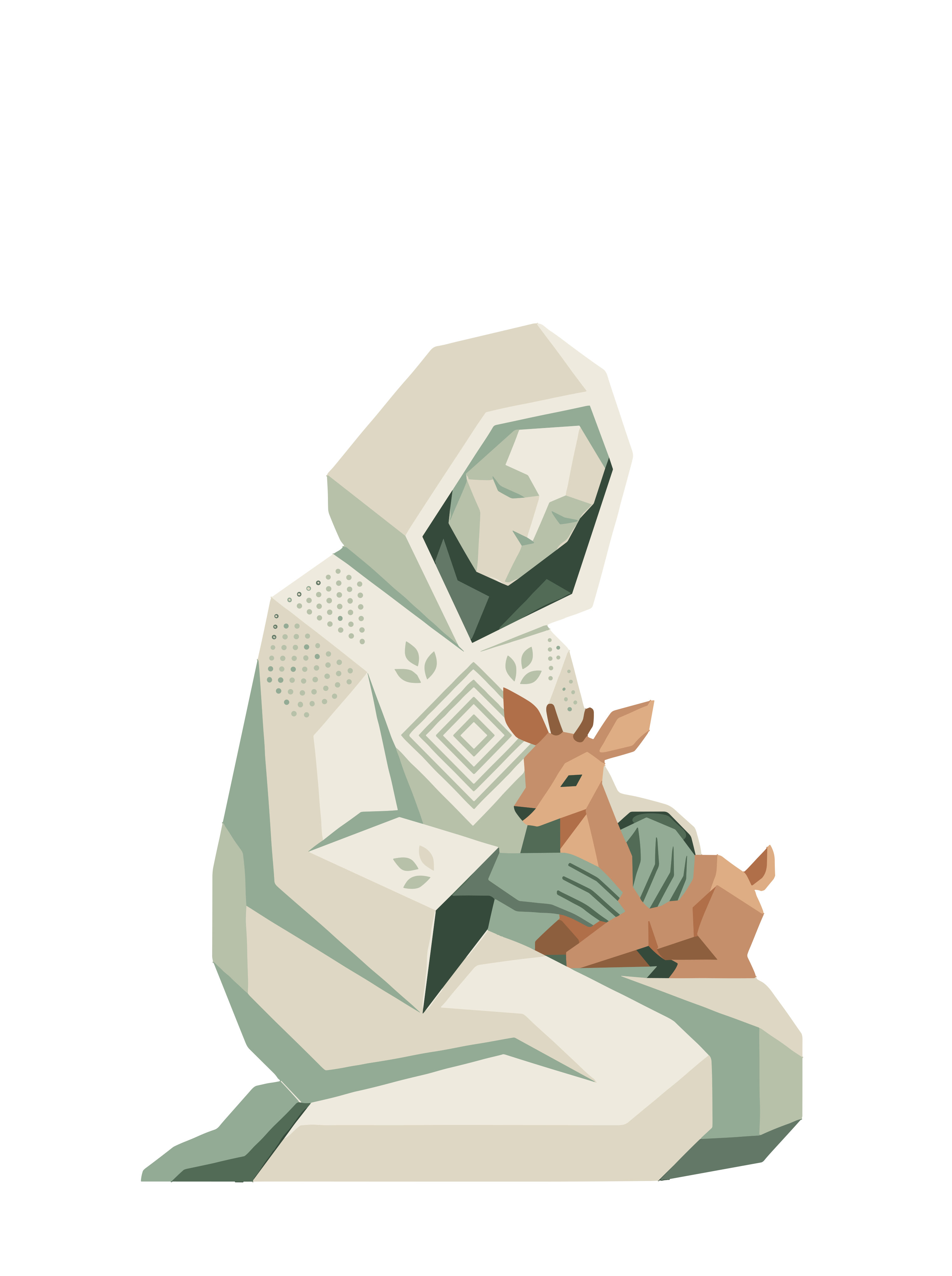
Not sure which one fits? The quiz takes seven minutes and tells you.
Discover your archetype →Other pairings.
A reading will tell you.
Twenty-four scenarios, seven minutes, one long letter to yourself. Anonymous. Free.
Begin the reading →A reading will tell you.
Twenty-four scenarios, seven minutes, one long letter to yourself. Anonymous. Free.